[rank_math_breadcrumb]
Payment Card – An Instrument of Exclusion
Since May 16, 2024, many German states have been introducing the so-called payment card for refugees. It replaces cash payments under the Asylum Seekers’ Benefits Act (AsylbLG) and, according to the federal government, it is intended to reduce administrative costs and curb international money transfers.
In practice, however, it leads to massive restrictions and social exclusion.
Refugees receive only 50 euros in cash per month, while all other benefits are paid out via payment card. This amount is often insufficient to cover basic needs.
In this article, we would like to explain what the payment card is, what specific consequences it has for refugees, and what can be actively done about it.
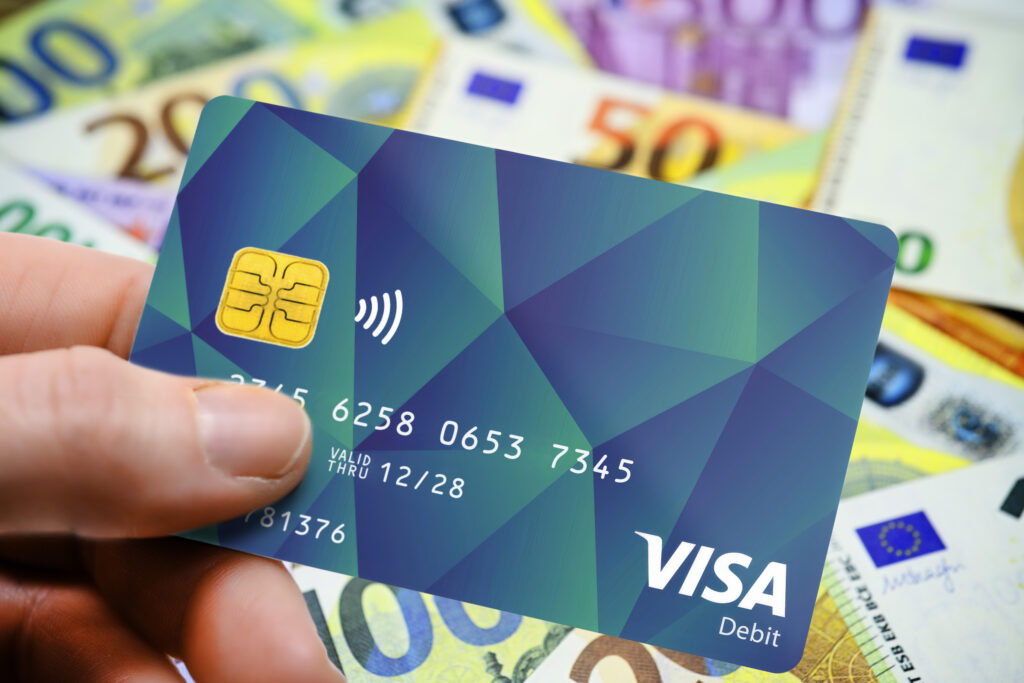
The introduction of the payment card is worsening the lives of many refugees in Germany. What politicians are selling as “administrative simplification” means in practice primarily one thing: less self-determination, more exclusion.
Instead of receiving cash benefits, many refugees have been referred to a limited prepaid card since May 2024 – with drastic consequences for their everyday lives.

Restricted & disheartening
No cash, no transfers – use only in specific shops.

Discriminatory & legally disputed
Court rulings cast doubt on the legality of cash restriction.

Solidarity-Based Resistance Grows
Swap groups in many cities are creating practical alternatives.

What is the payment card for refugees?
On May 16, 2024, a regulation came into force in Germany that significantly complicates life for many refugees: the nationwide introduction of a payment card.
This card replaces cash withdrawals for people receiving benefits under the Asylum Seekers’ Benefits Act (AsylbLG). It is not linked to a bank account , does not allow transfers or direct debits, and can only be used in certain stores such as Edeka, Rewe, Lidl, or Aldi.
Especially in rural areas or smaller shops, card payments are often not possible, which further complicates everyday life.
The German government’s goal is to simplify administration and restrict international money transfers. However, studies such as the one by the German Institute for Economic Research (DIW) show that only 7% of refugees and 12% of migrants without a refugee background transferred money abroad in 2021 (Silva & Zinn 2024, p. 771).

Criticism of the discriminatory payment card
The payment card for refugees is criticized for several reasons:
- No individual adjustment: Special life situations such as illness, family needs or mobility are not taken into account.
- Restricted use: It only works in certain stores and allows very little cash withdrawal which is only €50 per month. This severely restricts everyday spending.
- Increased bureaucratic effort: Technical problems and complicated procedures lead to additional strain for administrations and refugees.
- Legal dubiousness: Initial court rulings (e.g. in Hamburg) show that cash restrictions are inadmissible in many cases.
- Stigmatization & exclusion: The program labels refugees as “different” and makes social participation more difficult.

What can I do?
1. Participate in exchange groups
If you would like to join a local initiative or start your own exchange group, please get in touch with us:
📧 info@penager
2. Documentation & legal steps
The Society for Civil Rights (GFF) and PRO ASYL have successfully sued against blanket cash limits. Careful documentation of restrictions is crucial. For example, through screenshots, receipts, witnesses, or personal accounts. This is the only way to take legal action against this practice.
3. Create public awareness
Inform yourself and others. Share your experiences and background information about the payment card with your friends and family or via social media. Together we can build political pressure.

What is the exchange action?
In response to the payment card, solidarity exchange campaigns have formed in many cities, e.g. under the titles “No to the payment card” or “No to the discriminatory payment card”.
Here’s how it works:
- Refugees buy a voucher, e.g., at Rewe, DM or Lidl (e.g., €50).
- They take it to the exchange point.
- There they will receive €50 in cash.
- Supporters receive the voucher in return.
These actions circumvent the restrictions of the payment card practically and directly and at the same time strengthen solidarity.
The organization Seebrücke supports these actions and offers an overview of active exchange groups and further information on its website:
➔ More about the exchange action on seebruecke.org
Cities with active exchange groups (As of December 2024):
If you want to take legal action against the payment card, contact us at info@penager.de